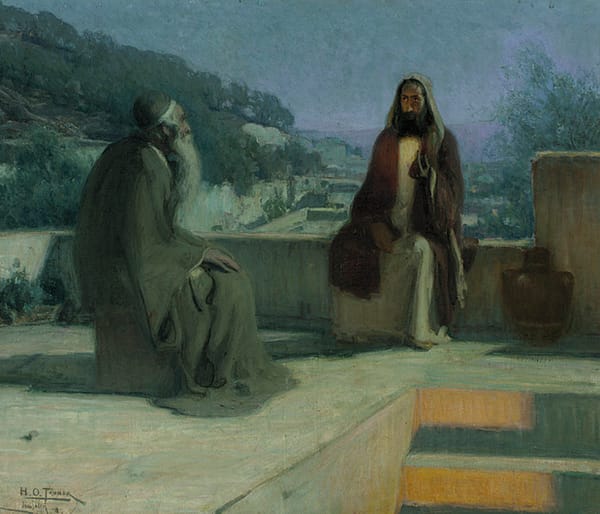
Who are we playing to?
Of course we aren't meant to play the fool in our lives to entertain a King or God but we do need to ask who are we playing for? - The World or the Father? - Governments and Leaders or Jesus ? - Self-Empowerment or the Spirit ?
Sermons tend to take a long time to write and due to this extended effort I do ask for sign ups to read and listen to sermons when I do them. Regular weekly content doesn't require this action. Sign Ups are Free.
For my members who are signed up I hope you enjoy!
Sermons are written for a certain location and space for a certain group of people. Therefore some items may be redacted or minimised as appropriate.
There is a few ways to engage with the sermon.
- Listen to the recording
- Read the transcription (there may be errors in the transcription)
- Read the full write-out (has differences to what was preached, but designed to be read)
Transcription
[00:00:00] Father, may the words of my mouth and the meditations of all our hearts be pleasing to you. In your son's precious name, Amen. (.....) "All the world's a stage, and all the men and women are merely players." The line is quite famous. It's a Shakespearean line from a play As You Like It, spoken by the character Jaques. Jaques is described as a perpetual brooder, and through this he seeks the full position so he can speak his wisdom to the duke. However, throughout the play, his statements that he makes are often disproven by the acts around him. This is based on history where the court jester and the fool had great freedom to speak and tried to speak well.
[00:01:01] They were always close to the king or the ruling class, and their task was to speak when others had to remain silent. There were sadly two types of fools. One was those who were severely mentally disabled, intellectual disabilities. The other was an artificial fool. This was someone playing a fool, and importantly, they were intelligent. They would speak advice and speak wisdom. (...) Now, I'll state very clearly, I do not believe we're called to play a fool for entertainment of a king or of God. But we do need to ask the question, who we ourselves are playing for? Are we playing for the world or for the Father? For governments and leaders or Jesus? For our own self-empowerment or the Spirit? Now, our concepts of fools and gestures come from that medieval time period.
[00:02:09] But Paul is also aware of this concept of a fool. In ancient times, a mime was not mute. They were instead a reflection or a mimic of the day. It was quite a sophisticated performance, and it was entertainment for all levels of society. The reflection that they would portray sometimes was vulgar or violent. However, the current thought is that this is actually a reflection on the time, not on that particular fool or mime or jester. (......) These positions, an ancient mime or an artificial fool, were desirable for the wise who wanted to send a message. They wished for influence, but for them, direct power was out of reach.
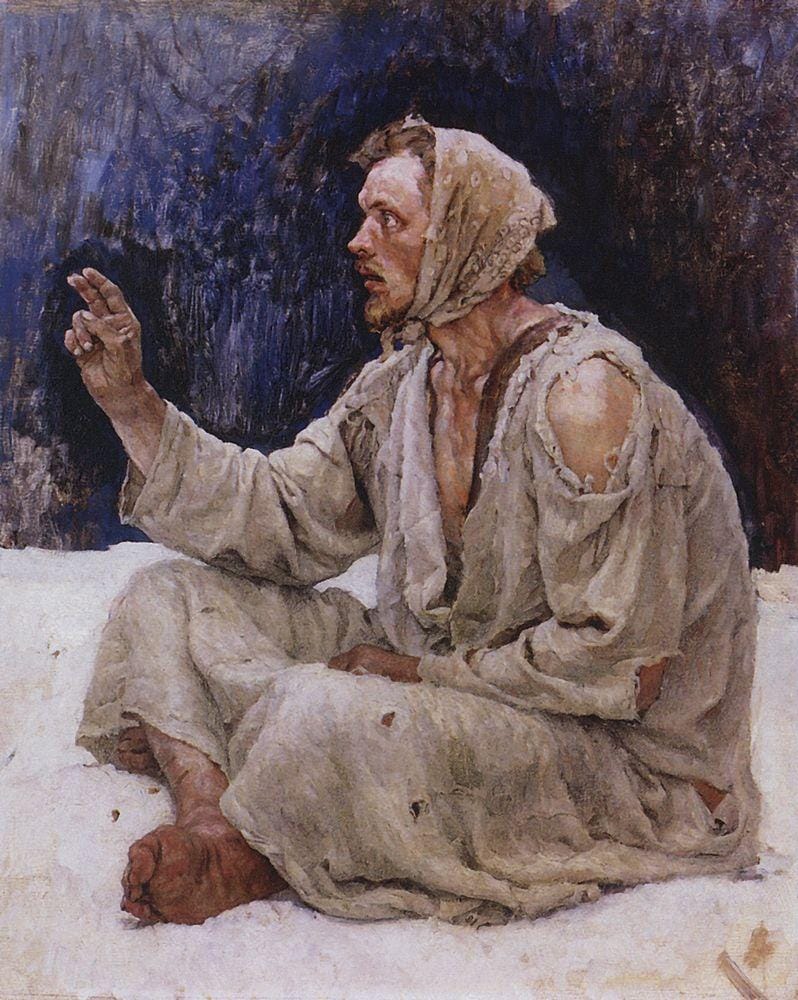
[00:03:12] Then we come to an imagery which I found while designing the sermon. The imagery of fools for Christ. You might have noticed the first slide today had a man, quite skinny, dressed in rags, sitting in the snow. These were ascetic-natured people. They were not next to kings. They were in public squares. And they believed this was their calling unto Christ. I do not believe that all of us are called that way. But that idea is not entirely outside of scripture. Ezekiel has a performative nature. He digs through walls while elders are in the house in Ezekiel 8. He bakes bread on cow dung in Ezekiel 4. Some of Ezekiel is revealing visions. And other times, it is clear the action is for an audience. Such as Ezekiel 12.
[00:04:13] To say you need to prepare to be exiled, He is called to pack for exile. He digs through his wall again. And he carries his belongings on his shoulders. Now, the reason I think we don't, we're not all called this way is because proclaiming Christ crucified is ridiculous enough. A song by Cory Asbury came into conflict quite a few years ago now. But the line goes, "the overwhelming, never-ending, reckless love of God". And to call God's love reckless is heretical perspective. If we're trying to view it from God's perspective. (...) But without revelation of Christ, to die on a cross for all the creation is a reckless act. We understand it through our knowledge of Christ. And we turn to our scripture readings, 1 Corinthians 1.22-25.
[00:05:15] For Jews demand signs and Greeks desire wisdom. But we proclaim Christ crucified, a stumbling block to Jews, and foolishness to the Gentiles. But to those who are called both Jews and Greeks, Christ, the power of God, and the wisdom of God. Do we lose sight of this outrageous nature? Do we know that we proclaim foolishness and stumbling blocks? Do we know that that is our position, not as the wisest or rulers, but finding our power within that revelation of Christ? And I would go as far to say the history of Christendom, when Christ, when the church was almost the ruling power throughout Europe, kind of shows that when we're placed in positions of rule, we lose power very quickly. We lose our faith. (...) But rather than these things of human perspective, we're called for greater things in God's perspective.
[00:06:20] And our gospel reading upholds this holy kingdom perspective in the Beatitudes. We see people who are empty, who need God. Five of the blessed lines signify emptiness being filled. God transforms lives. And God works strongest in those who are in need. They don't have anything to put walls up to prevent God working in this case. And God finds glory in this, because the human ego doesn't get in the way. One who is in a good space works within God's perspective. They're called to be merciful, as God is. To be pure in heart, just as God is good. To be a peacemaker, just as God has removed the enmity between humanity and God's self on the cross. And our psalm opens its description further,
[00:07:23] that we're called to live an uncorrupted life. We're called to speak truth, not evil. Not giving undue honor, in particular, to those not following God. It's interesting that our psalter puts worthless in that place. But it is those who are not following God. We're called to keep promises. We're called not to serve money. And I believe it is the foolishness of the cross that lets us achieve this. Then we come to the lines about those who are persecuted. Blessed are those who are persecuted for righteousness' sake. (.....) It seems recent events have reignited this idea in Western society. To be persecuted for righteousness' sake is not about being Christian and proclaiming Christ. However, for many people in America protesting immigration officers,
[00:08:24] they are being persecuted while working for righteousness' sake, whether they are Christian or not. They are suffering violence, media split, and even death for a number of them. Now, churches have joined this movement, aligning with the community because these actions that are happening are not right. The Bishop of New Hampshire called for clergy to have their wills and affairs in order. Not that they should seek martyrdom, but that their position might put them in between a person and a gun. Over 90 clergy were arrested the other day while protesting at the airport, wearing stoles, the yokes of Christ. In a way, particularly the danger around these actions at the moment and misunderstandings, these clergy are being fools for Christ.
[00:09:24] And so are many Christians who are joining these protests. But importantly, the church is not being persecuted in America under their belief of Christ at this moment, but instead the fact that they're working for righteousness' sake, just as most of the protesters are. The church itself, for its belief in Christ, does not seem to be under heavy persecution in America. However, elsewhere it is, incomparably, it is. China, once again, is cracking down on the underground church movement. Sub-Saharan Africa has more kidnappings, killings, and more against Christians. These are people who are reviled and persecuted because of Jesus' name. And there is more martyrs than we will ever know. It seems in these contexts that speaking Christ's name alone is dangerous.
[00:10:26] It is a foolish action by human standards. Yet, we are the players in this world, and by human standards, we are called to be the fool. We are called to recognize that although we're not the wisest in the world or the most powerful, we can influence this stage. And we need to uphold the true realities behind this life as we speak into the world. We also need to trust the playwright, that the Spirit will give us the words to say when we need them. In all this, we uphold that the one we are called to play for is not a ruler of this earth. Rather, it is Christ, who knew the earth, who before us played the fool for God to the point of death on a cross. Letting us step in during this epilogue.
[00:11:30] Let us refocus on the acts before us and know that the end is written. But we can still be active as Christians today, and possibly even more than we've been able to in the past. (.....)
God, the writer of the universe,
who sculpted our land, wrote our DNA, and all the creatures and creation we enjoy.
May we look to you in our everyday to be wise in foolishness, so that we can bring more into this incredible work of yours.
In your Son's greatest name, the one who we preach crucified, Amen.
Scriptures
1 Corinthians 1.18-31; Psalm 15; Matthew 5.1-12
Who are we playing to?
"All the world's a stage, And all the men and women merely players." Is a line we have all heard in our lives and either know or guess it is Shakespeare. The line comes from a play As You Like It and is spoken by the character Jaques. If you look him up you soon find out he is a perpetual brooder and through this he desires to be a fool to speak wisdom to the Duke. Yet, he isn't as wise as he things because his statements are often disproven by the acts happening around him.[1] He was right that a fool does have a great privilege and freedom to speak often breaking the silence when others wouldn't dare. They were close to the rulers or upper classes and came in two forms. One the severely mentally ill and disabled, the other artificial when someone would play this fool. The artificial fool was often highly intelligent and speak advice in the adverse situations.[2]
Of course we aren't meant to play the fool in our lives to entertain a King or God but we do need to ask who are we playing for?
- The World or the Father?
- Governments and Leaders or Jesus
- Self-Empowerment or the Spirt.
Fools and Jesters as we think are wearing bright jumpsuits from the medieval period. There were Fools in ancient times which would have been known to Paul but they were called mimes. We know Mimes as silent acts but instead were imitators of people. They were sophisticated in their approached but reflected the day giving entertainment that was relatable to all levels of society. Importantly they reflected society, so ancient evidence that suggests what a mime's act was a reflection of the person or group showing a vulgar nature at times. In these acts they spoke to society giving entertainment in the commentary.[3]
Both fools and mimes were desirable positions for people who were wise and wanted to get a message across but couldn't climb the societal ladder. They allowed influence without direct power. Other images we can see about Fools is Fools for Christ like the image on our first slide today. The images themselves have a ridiculous and sad nature. They are usually ascetic, not giving themselves comfort, skinny, in snow with nothing but rags. These Fools were not next to kings providing entertainment, instead it was a display of their unique relationship with God. To be clear that is not where I think most Christians are called to Go.
The concept of this Ascetic fool is not entirely outside scripture. Immediately I am drawn into Ezekiel which has this public performative nature including digging through his walls while Elders were in the house Ezekiel 8; baking bread on cow dung Ezekiel 4; although some parts of Ezekiel are clearly visions there are also clearly actions for an audience like in Ezekiel 12, he is all to pack for exile while everyone watches, then at night he is to dig through his wall... again and carry his belongings on his shoulders. All of this preface of fools with intelligence, performative natures or the ascetics is to come to a vital point.
Proclaiming Christ Crucified is ridiculous enough of a foolish action in which today we can play a fool. A lot of this work is perspective and it reminds me of the controversy of the Song Reckless Love by Cory Asbury, "the overwhelming, never-ending, reckless love of God". The issue there is God's love is not reckless, the statement is heretical if we view it from God's perspective. From human perspective, the statement is extremely true; God's actions seem reckless but they are calculated and planned in pure love. 1 Corinthians 1.22-25 speaks of this, "For Jews demand signs and Greeks desire wisdom, but we proclaim Christ crucified, a stumbling-block to Jews and foolishness to Gentiles, but to those who are the called, both Jews and Greeks, Christ the power of God and the wisdom of God."
The questions we can ask: do we lose sight of this outrageous nature? do we recognise the foolishness and stumbling blocks we proclaim? do we know our position not as the wisest or the rulers but that our power comes through Christ and the revelation of Christ? The History of Christendom, often shows that we have issues being rulers and powerful as we play to that not to our Faith. These rulers and powerful figures were tied to a human perspective not to God's perspective.
We only can understand hints of this Holy Kingdom perspective and the beatitudes contains these hints. Five of the lines show that God is wanting to fill the emptiness of the broken, God wants to transform lives and we know God works strongest in time of need. There is great glory in this outpouring too as the human ego can not get in the way. The one who is in a good space can state working within God's perspective. They are no longer in their lowest so they show mercy as God shows mercy. They seek purity of heart as God is good and provides the answer for such things. They desire peace, as God revealed on the Cross removing all enmity between humanity and God. The Psalm then explores this life more, to live uncorrupted, speak the truth and not evil, not giving undue honour to those not following God, keeping their promises and oaths, and not serving money. We start seeing the Character that we are meant to play and I believe it is the foolishness of the Cross that lets us achieve this.
Two more sections in the beatitudes explore those who are persecuted. Persecution in a western society has been very mild and I would say non-existent at times. There is two types of persecuted in this gospel reading. The ones who are persecuted for righteousness sake and the ones who are persecuted for their belief in Christ. Recent events have shown that western countries are not immune from this persecution for Righteousness sake and I will say this is not just about being Christian, our understanding of righteousness should come from God as Christians, but many are being persecuted for righteousness sake. In America we see the protest of immigration officers and these protesters are being persecuted for righteousness sake through violence or even media spin. When doctors can't apply treatment to the wounded I can't think of another way to describe it.
Churches have joined in this, our brothers and sisters in the Episcopalian church and many more. The Bishop of New Hampshire a couple of weeks ago asked his clergy to have their affairs and wills in order. His working is a clear statement that they might die trying to protect someone; they are not to seek martyrdom but do their roles even if that means stepping in front of a weapon.[4] The other day over ninety clergy were arrested after protesting ice, most of which were wearing their stoles a symbol of the yoke of Christ.[5] They are being Fools for Christ, playing for the goodness of the world but playing to God.
Even in this case these clergy and individuals are not being persecuted for their faith, they may be acting within it, but it is for a fundamental righteousness. The Church itself, for it's belief in Christ in America isn't under persecution for that; acts within Christ yes, but not for the Christian belief. Elsewhere it is a different story.
China has had a fresh crackdown on underground Churches.[6] Sub-Saharan Africa has had increased kidnappings, killings and horrible actions against Christians.[7] These are the ones being reviled and persecuted for Jesus' name and there are more martyrs then we will ever know. This is where speaking the name Jesus is dangerous.
Yet we are the players in this world; we are called to be the fool. We are to recognise that although we are not the wisest in the world or the most powerful we can influence this stage. We need to uphold the true realities behind this life as we speak into the world. We need to trust the play write, that the Spirit will give the words we need when we need them. In all this we uphold that the one we are called to play for, is not one of this earth. Rather, it is Christ who knew the earth, who before us played the fool for God to the point of Death on a Cross letting us step in during this Epilogue. Let's refocus on the acts before us and know the end is written but we can still be active as Christians today, possible even more then times in the past.
God, the writer of the universe,
Who sculpted our land, wrote our DNA and all the creatures we enjoy.
May we look to you in our every day to be wise in foolishness,
So we can bring more into this incredible work of yours
In your Son's greatest name, the one who we preach crucified,
Amen.
References
Bibliography
Basser, Herbert W. 2015. The Gospel of Matthew and Judaic Traditions: A Relevance-Based Commentary. Vol. 46. Brill Reference Library of Judaism. Brill.
Bender, Kimlyn J. 2022. 1 Corinthians. Brazos Theological Commentary on the Bible. Brazos Press, a division of Baker Publishing Group.
Best, Michael. n.d. ‘Jesters and Fools :: Life and Times :: Internet Shakespeare Editions’. Accessed 29 January 2026. https://internetshakespeare.uvic.ca/Library/SLT/society/court%20life/fools.html.
Broyles, Craig C. 2012. Psalms. Baker Publishing Group.
Ciampa, Roy E., and Brian S. Rosner. 2020. The First Letter to the Corinthians. Pillar New Testament Commentary. IVP.
Episcopal Priests Share Experiences Protesting as Immigration Raids Continue in Minnesota – Trinity Episcopal Church. n.d. Accessed 30 January 2026. https://trinitymartinsburg.org/church/episcopal-priests-share-experiences-protesting-as-immigration-raids-continue-in-minnesota/.
Fuzy, Jeremy. 2026. ‘Two Episcopal Bishops Say Clergy May Have to Put “Bodies on the Line” to Resist ICE’. Word&Way, January 16. https://wordandway.org/2026/01/16/two-episcopal-bishops-say-clergy-may-have-to-put-bodies-on-the-line-to-resist-ice/.
Grogan, Geoffrey. 2008. Psalms. The Two Horizons Old Testament Commentary. William B. Eerdmans Pub. Co.
Hawkins, Amy. 2026. ‘Underground Church Says Leaders Detained as China Steps up Crackdown’. World News. The Guardian, January 11. https://www.theguardian.com/world/2026/jan/11/underground-church-early-rain-leaders-detained-china-crackdown.
Jenkins, Jack. n.d. ‘Hundreds of Clergy Descend on Minneapolis and Go on Lookout for ICE’. Text. National Catholic Reporter, National Catholic Reporter. Accessed 30 January 2026. https://www.ncronline.org/news/hundreds-clergy-descend-minneapolis-and-go-lookout-ice.
Jones, Neil. n.d. ‘The History of Court Jesters in Britain: Fooling Around’. Https://Www.Discoverbritain.Com. Accessed 29 January 2026. https://www.discoverbritain.com/history/traditions/history-of-court-jesters/.
‘Open Doors: Number of Christians Persecuted Worldwide Rises to 388 Million - Vatican News’. 2026. January 15. https://www.vaticannews.va/en/church/news/2026-01/open-doors-world-watch-list-2026-report-christians-persecuted.html.
SparkNotes. n.d. ‘Jaques Character Analysis in As You Like It’. Accessed 29 January 2026. https://www.sparknotes.com/shakespeare/asyoulikeit/character/jaques/.
Spokesman.Com. 2026. ‘100 Clergy Arrested at Airport Protest as Minnesotans Strike against ICE’. January 23. https://washingtonpost.com/nation/2026/01/23/minnesota-general-strike-ice-protest/.
Welborn, Laurence L. 2005. Paul, the Fool of Christ: A Study of 1 Corinthians 1-4 in the Comic-Philosophic Tradition. Journal for the Study of the New Testament 293. T & T Clark international.
SparkNotes, ‘Jaques Character Analysis in As You Like It’. ↩︎
Jones, ‘The History of Court Jesters in Britain’; Best, ‘Jesters and Fools’. ↩︎
Welborn, Paul, the Fool of Christ, 4. ↩︎
Fuzy, ‘Two Episcopal Bishops Say Clergy May Have to Put “Bodies on the Line” to Resist ICE’. ↩︎
Spokesman.Com, ‘100 Clergy Arrested at Airport Protest as Minnesotans Strike against ICE’; Episcopal Priests Share Experiences Protesting as Immigration Raids Continue in Minnesota – Trinity Episcopal Church; Jenkins, ‘Hundreds of Clergy Descend on Minneapolis and Go on Lookout for ICE’. ↩︎
Hawkins, ‘Underground Church Says Leaders Detained as China Steps up Crackdown’. ↩︎
‘Open Doors’. ↩︎